



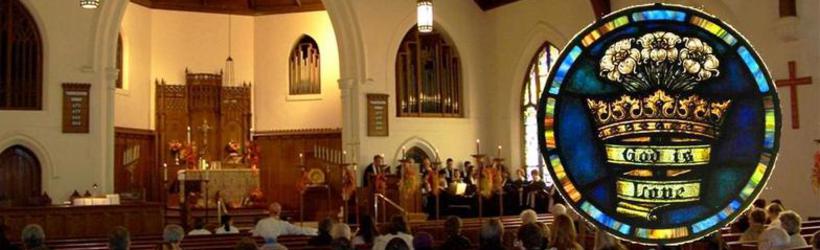

Bethlehem Lutheran Church
The Heart of Bay Ridge

Sunday Service 10:30am
4th & Ovington Avenues
Brooklyn NY 11209
718.748.9502

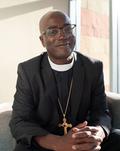
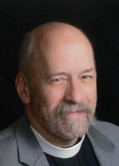
Presiding Bishop
Yehiel Curry
Bishop Katrina D. Foster



About the Lutheran Church
We are a progressive Christian church, founded out of a reform movement to make the church relevant to our daily lives and use Christ as a model of the Godly life. Lutherans constitute the oldest and largest of the Protestant communities and number 65 million members in thousands of congregations throughout the world. Bethlehem is a congregation of the Evangelical Lutheran Church in America (ELCA).
Lutheran History
The Lutheran Church was founded in the 1500's as a reform movement to the Roman Catholic Church.
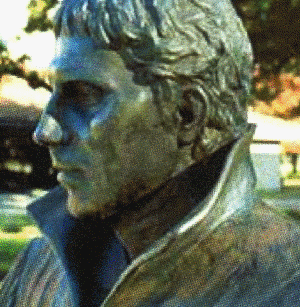
Martin Luther, who was born in Germany in 1483, is known as the Father of Protestantism. He had studied to become a lawyer before becoming a priest. While continuing his studies he discovered significant differences between what he read in the Bible and the theology and practices of the Catholic church at the time. On October 31, 1517 he challenged the church on a number of theological issues in the hope that the church would reform its practices and become more consistent with the teachings of the Bible and relevant to the people of the day.
What started as an academic debate escalated into a religious war and, as a result, there was not a reformation of the Catholic church but a total separation from it.
One of Martin Luther's goals was to free people from a dependency on a church hierarchy. He believed people do not need a church to have a relationship with God and sought to bring Christ's word and example directly to the people. He was the first person to translate the Bible into the language of the common people and urged Christians to take a stand on matters of principle. Luther's message of emancipation spread like wildfire around the world and led to a mass exodus of priests who carried out their ministries through the burgeoning Protestant religions of northern Europe, Great Britain, Scandinavia and North America. Unburdened by old church loyalties, Luther's religious reformation quickly lead to reforms in government administration, welfare, charity, education and virtually all aspects of society. As a result, Martin Luther is considered one of the great social reformers of history.
What do we do at Bethlehem?
We join together in worship. We give thanks for what we have. We gather with family and friends. We share in Holy Communion. We get involved in the community.
What do Lutherans believe?
Lutherans are not a monolithic group espousing identical views on all subjects of theology, religion and society. Nor are our views imposed upon us from a church hierarchy. However, our church has both basic historic tenets that form us as Lutherans and social statements on topical issues (see What about societal issues? below).
The Bible: We believe the Bible, read and interpreted in its context, contains the standards for our daily lives, but is not a definitive record of history or science. We believe the church exists to hear, help interpret, and carry out those teachings.
Creation & Free Will: We believe that God is creator of the universe and God is continually creating, calling into existence each moment of each day. Human beings are given the capacity and freedom to know and respond to our creator. Freedom implies that we can choose to respond to God either positively or negatively.
Good Works & Salvation: Lutherans believe people are saved by the grace of God alone. Our good works are done in thankfulness for all that God has given to us -- not out of fear or as a penance for salvation. We believe salvation is gained through faith.
Life After Death: While there is much we do not and cannot know about life beyond the grave, Lutherans do believe that life with God persists even after death. No description of what that life may be like is possible. As a result, there is no need for anxiety. Christians should go about their daily lives, trusting in God's grace and living a life of service in his name.
Sacraments: Lutherans accept two Sacraments as visible acts of God's grace. In Baptism God freely offers his grace and establishes a new community, where the person becomes a member of the church. In Holy Communion God's forgiveness and mercy is represented in receiving the bread and wine. This communal act nourishes believers and solidifies their union with God and with each other. If you are able to receive communion in your home church, you are always welcome to receive communion at an ELCA Church regardless of your affiliation.
Sin: All people live in a condition that is the result of misused freedom. Sin describes not so much individual acts of wrongdoing, but as fractured relationships between people and God. Our failure to live up to God's expectations reveals only our need for God's mercy and forgiveness.
What about societal issues?
The social statements formed by our church (the Evangelical Lutheran Church in America - ELCA) do not bind members to a particular position, but rather address members in their Christian freedom.
The statements are often developed from the ground up, through congregations and regional synod assemblies proposing positions to the larger ELCA Churchwide Assembly. After research, comment and careful theological review, statements are presented as a framework for our members to use in making decisions related to their personal lives and their lives in our church. In addition, the statements themselves have some fluidity and are subject to further revision in light of the tenor of the times, society and interpretation.
Abortion: Human beings have intrinsic value and dignity. We live in community, with responsibility and accountability to God, self, and others. Women, faced with unintended pregnancies, are called to be good stewards of life by making responsible decisions in light of these relationships. Women and men share equally in the responsibility and accountability for procreation, although it is women who are most intimately affected by decisions about abortion. The number of induced abortions is a source of deep concern to the church and we mourn the loss of life that God has created. The strong Christian presumption is to preserve and protect life. Abortion ought to be an option only of last resort. Therefore, as a church we seek to reduce the need to turn to abortion as the answer to unintended pregnancies.
Death Penalty: Our church recognizes the need to protect society from people who endanger that society: removing offenders from the general population, placing them in a secure facility, and denying them the possibility of committing further crime. Our challenge is to incapacitate offenders in a manner that limits violence, and holds open the possibility of conversion and restoration. Capital punishment focuses on retribution, sometimes reflecting a spirit of vengeance. Executions do not restore a broken society and can actually work counter to restoration. As a result, our church opposes capital punishment, as it is inconsistent with that restorative goal.
Divorce: The church should be a community of care and hope for those who divorce, rather than blaming, ostracizing, or being indifferent to their needs. Regrettably, some marriages end in divorce. However, continuing some marriages may be destructive and abusive to those involved. Remarriage can be an opportunity to use wisdom gained from the past to create a new relationship of loving commitment and joy.
Living Wills: A Christian perspective mandates respect for each person, such respect includes giving due recognition to each person's carefully considered preferences regarding medical treatment decisions. Although our church opposes doctor assisted suicides, we support the right of patients who, with the advice and counsel of their family, friends, pastor and doctor, plan for all eventualities of being on artificial life-support.
Sex: Marriage is the appropriate context for sexual intercourse. Although the goodness of sexual intercourse goes beyond its procreative purpose, whenever it occurs apart from the intent to conceive, the use of contraceptives is the responsibility of the man and of the woman. Sex education should be provided in the context of the Christian faith. Such education, beginning in the elementary years, needs to emphasize values such as responsibility, mutuality, and abstinence from sexual intercourse outside of marriage. Parents should also be prepared to teach sexual responsibility to their children in the home.
Sexuality: Human sexuality was created for the purposes of expressing love and generating life, for mutual companionship and pleasure. Because human sexuality is a powerful, primal force in personal and communal life, both church and society seek to give some order to sexual expectations and expression. Christians are called to: respect the integrity and dignity of all persons, whatever their age, gender, sexual orientation, or marital status; discern and provide guidance for what it means to live responsibly as sexual beings; support through prayer and counsel those facing questions about their sexuality; and heal those who have been abused or violated, or whose relationships are broken.
Sexuality & the Clergy: Married pastors are expected to be faithful to their spouses. Gay men and lesbian women are welcome to serve as pastors in our church. At ELCA's August 2009 Churchwide Assembly, several resolutions were approved, which effectively recognized that gay individuals in life-long, monogamous, same gender relationships, could serve as professional leaders, including pastors, in the church and in congregations. It also allowed for congregations to hold public recognition ceremonies and marriages for gay individuals entering into life-long, same gender relationships.
Sexual Orientation: Bethlehem Lutheran Church became a Reconciling in Christ congregation on February 23, 2010. People of all sexual orientations and gender identities are welcome within the membership of this congregation and are encouraged to share in the sacramental and general life of this Christian family. Being a Reconciling in Christ congregation is an affirmative step taken when we joined 400 other congregations around the nation in making the statement that all, are truly welcome here. At Bethlehem we welcome same-sex couples who deeply desire to make their commitment before God in a church setting with their church family present. As with all wedding ceremonies, we only perform weddings for couples who have an association with our church, or affiliated ministries (such as our school, senior center or domestic violence counseling center). For more information please go to ReconcilingWorks.
Is Lutheranism the one true religion?
Lutherans make no claim of infallibility or perfection. We believe we have found the right way of responding to God's grace, but acknowledge that there may be others with equal claim. Lutherans recognize a wide fellowship of churches and work alongside them in ecumenical ministries, social services and relief efforts locally, nationally and internationally.
How is the Lutheran church structured?
Bethlehem Lutheran Church is part of the Evangelical Lutheran Church in America (ELCA), the fifth largest religious organization in America. There are nearly 5 million members of ELCA in 11,000 churches in the United States. ELCA was formed in 1988 after a break with The Lutheran Church-Missouri Synod (LCMS), and the resulting merger of the Lutheran Church in America, the American Lutheran Church, and the Association of Evangelical Lutheran Churches. ELCA is a mosaic reflecting not only the ethnic heritages of traditional Lutherans through its original churches, but also the full spectrum of American culture in which it serves.
In 2025, ELCA elected Presiding Bishop the Rev. Yehiel Curry of Chicago for a six-year term. He and his wife are parents to three daughters.
ELCA has regional synods and Bethlehem is part of the Metropolitan New York Synod. Our Bishop, the Rev. Dr. Katrina D. Foster was elected in 2025.
ELCA & The Missouri Synod (LCMS)
The differences between the Evangelical Lutheran Church in America (ELCA) and The Lutheran Church-Missouri Synod (LCMS) largely arise from historical and cultural factors, although some are theological in character. The LCMS is the second largest Lutheran church body in North America (2.7 million). It identifies itself as a church with an emphasis on biblical doctrine and faithful adherence to the historic Lutheran confessions. The pattern of Scripture interpretation generally practiced in the ELCA seeks to consider carefully the meanings of passages and their form, including the time and place in which passages were written. Emphasis is placed on the message of a specific text within the context of Scripture. Insistence by some LCMS leaders on a literalist reading of all passages of Scripture led to a rupture in the mid-1970s, which in turn resulted in the formation of the Association of Evangelical Lutheran Churches, now part of the ELCA.
The ELCA also tends to be more involved in ecumenical endeavors than the LCMS. The ELCA, through predecessor church bodies, is a founding member of the Lutheran World Federation, World Council of Churches and the National Council of the Churches of Christ in the U.S.A. The LCMS does not belong to any of these.
How is Bethlehem structured?
Lutheran Churches are congregation-based and run by the members of each individual church through an elected Church Council. A Pastor -- who may be a man or woman, married or single, straight or gay -- is selected by the Council as a theological and moral leader. Bethlehem's members, represented by their delegates at synod (i.e. regional) assemblies, elect our bishops.
How do you become a Lutheran?
Anyone baptized in a Christian church or from another faith is welcome to join Bethlehem Lutheran Church as a member. We offer instructions for children in 5th Grade and new member classes for adults. Please call Pastor at 718-748-9502 (or e-mail him) for more information about joining Bethlehem.
Bethlehem Lutheran Church ® | 4th & Ovington Avenues, Brooklyn NY 11209 | 718.748.9502
A member of the Evangelical Lutheran Church in America (ELCA)
